Your gym ran healthcare's experiment for it
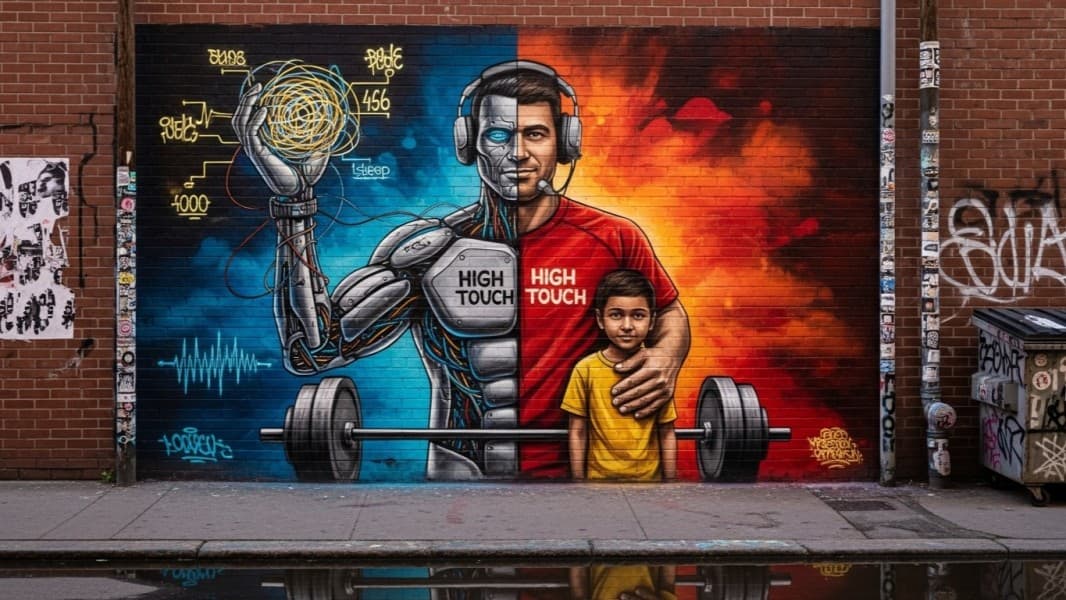
Saturday, 9am. The bar on my corner that used to have a Friday queue is half-empty, and the gym two doors down has a waiting list for the squat racks. I noticed it in my own week first: the people I used to see ordering a second round are now comparing recovery scores over coffee. Turns out I wasn't imagining it. Bank of America's spending data shows Gen Z and millennials are moving their money from barstools to barbells, with fitness and active hobbies now outgrowing nightlife.
Something bigger is hiding inside that shift. The fitness industry has spent three years doing what healthcare keeps saying it's too cautious to try: hand millions of ordinary people a wearable, a stack of AI tools and more data about their own bodies than any GP visit ever gave them, then watch what actually changes behaviour. It ran the experiment at consumer scale, with real money on the line. And the result is not the one the technology vendors promised.
When the National Academy of Sports Medicine surveyed 600 trainers this year, the headline wasn't a gadget. It was that longevity has overtaken aesthetics as the number one client goal, with 62% of trainers reporting the surge. People aren't training for a summer photo anymore; they're training to still be hiking, or dancing at the party, on their 90th birthday. There's a quieter motive too. Bloomberg recently gave it a name, "hotspan": the pressure midlife men now feel to stay lean and frankly attractive into their sixties, not just alive. Vanity and vitality stopped being separate purchases. GLP-1s only accelerated it: as the drugs took over weight loss, the trainer's job quietly shifted from burning fat to protecting muscle. The wearables multiplied. The AI coaching apps multiplied. The data multiplied.
And here is what the same survey found about all that technology: the data turned out to be the commodity, and the human who turns it into behaviour turned out to be the premium.
NASM calls the model "High Tech, High Touch". Sixty-nine percent of professionals now treat AI as a helpful partner for the back office, the programming, the tracking, the admin, precisely so they can spend more of their hours on the part a model can't reach. Mike Fantigrassi, who runs product there, put it plainly: AI can calculate a programme in seconds; what it can't do is navigate behaviour change. A client arrives with an Oura ring, an Apple Watch and a month of numbers, and the value isn't the numbers. It's the person who reads the whole picture, the movement and the sleep and the stress and the rotten week at work, and decides today is not the day to push. He calls that role the "Human Operating System". In a 2025 survey of high-net-worth individuals rating every professional service in their lives, personal trainers scored highest of all, 9.3 out of 10. Not because they owned the best app. Because they showed up and held people to account.
Now hold that next to healthcare, because this is a preview.
We are pouring capital into the high-tech half of the equation: AI scribes, diagnostic models, ambient documentation, triage bots. That is the right investment, and I've argued before for the small-agent version of it. But we keep starving the high-touch half. The district nurse, the GP who actually knows your history, the health coach who calls when your numbers drift; these get treated as costs to optimise away, which is exactly the role the fitness data just identified as the premium product.
- For patients, the scarce resource was never information; it was someone to help them act on it.
- For clinicians, AI that absorbs the documentation isn't the thing that replaces them, it's the thing that finally hands them their consultation back.
- For hospitals and payers, the uncomfortable read is that the cheapest work to automate is the work everyone is racing to automate, while the part that genuinely moves outcomes is the relationship they keep trimming.
The fitness industry stumbled onto this because it lives or dies on whether you come back next month. Healthcare can still hide behind the fact that, mostly, people have nowhere else to go. That protection is thinning. The same consumers chasing hotspan and redirecting their money from bars to gyms are the ones who will soon expect their longevity clinic, their employer health plan and eventually their hospital to feel less like a transaction and more like a coach who remembers them.
So here is the experiment worth running in your own organisation this quarter. Take one clinical or care workflow, deploy AI on the genuinely tedious parts, the notes, the coding, the scheduling, and then do the thing most efficiency projects skip: reinvest every freed minute into human contact instead of banking it as a headcount saving. Then measure whether people come back, stick with the plan, get better. That's the scoreboard the gym down the road is already winning on.
The longevity boom looks like a technology story. The data says it's a relationship story wearing a technology costume. Your gym worked that out first. The open question is whether healthcare reads the result before it spends another decade buying the wrong half.
💥 May this inspire you to spend your AI savings on people, not subtract them.