Same signal, opposite verdict
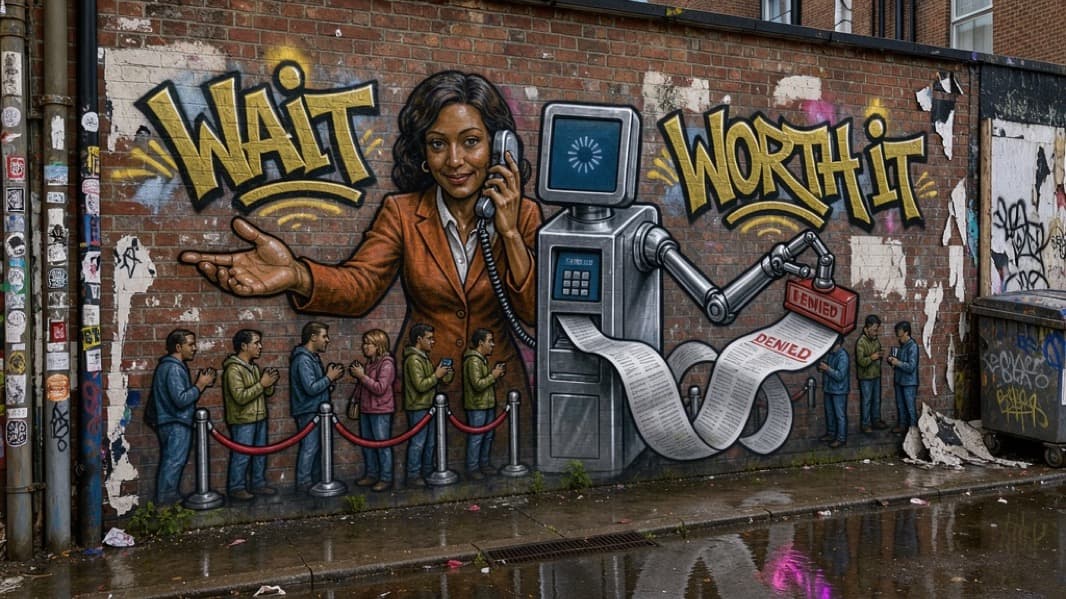
On 1 October I posted a throwaway line on X: Neko Health had just opened in New York with 25,000 people on the waitlist: A waiting list in traditional healthcare = a broken system, and a waiting list at a startup = proof of demand.
It barely registered, which is fair, because it was only a third of a thought. In the same fortnight, two more paradoxes turned up that run on the same logic.
The queue you brag about
Neko's first US clinic opened on 24 September in a SoHo basement that a New York Post reviewer described as right out of Severance. The scan costs $499. A London customer posted on X that they'd waited more than a year for theirs, and it felt more like a spa than a doctor's office. According to PureWow's review, 75% of members book and prepay their next scan before they leave.
Now hold that next to the NHS. At the end of July, England's hospital waiting list stood at 7.33 million treatments, with more than 111,000 people waiting over a year. Nobody calls that list proof of demand, even though, technically, it is.
The length of a queue says little about quality. What changes the reading is whether you chose to stand in it. A waitlist you join out of curiosity feels like a velvet rope. A waitlist you're put on because your knee gave out feels like a locked door.
And what is Neko really selling? Read the reviews and it's rarely the scanner. The PureWow reviewer's favourite part “wasn't the technology. It was what came afterward”: a sit-down with a clinician who explained the results, instead of a portal full of numbers to Google at midnight.
Healthcare buys the kiosk retail threw out
Retailers spent a decade installing self-checkouts, and now a handful are cutting back on the kiosks and rehiring cashiers. Rohit Bhargava frames it as a tech optimism cycle: a spreadsheet promises compounding savings, executives underestimate the side effects, and a few years later the people come back. Anyone who has heard a kiosk insist on an unexpected item in the bagging area knows what those side effects sound like. Fast food is following suit: the Contagious newsletter tracked McDonald's retraining crews around greetings and Starbucks putting more than $500m into extra staff hours.
Healthcare is installing the kiosk just as retail rips it out. The current wave is the AI receptionist, a voice agent that answers the clinic phone and books around the clock. Patients have opinions about that. In a survey of more than 2,000 US adults reported by Medical Economics on 22 September, three in four called a health call stressful, and among those who'd dealt with AI on one, nearly a quarter gave up without getting help. An answering-service company ran the survey, so read it with that in mind, but the direction matches what retailers learned the expensive way.
Why cut costs when you can bill more?
AI arrived in healthcare administration with a promise to take cost out. Hospitals and insurers are using it to fight over who gets paid. CNBC reported on 1 October that the Blue Cross Blue Shield Association links hospitals' AI-assisted coding to $942 million in extra costs between 2023 and 2025, with roughly 70% of it tied to added diagnoses that came with no change in care. The hospitals' association hit back by pointing at insurers' own automated downcoding and denials. The Medical Group Management Association is shopping Congress a draft bill to ban automatic downcoding and told Medical Economics on 5 October it rewrote the text to name artificial intelligence outright. An Oliver Wyman partner summed up where this ends: “robots talking to robots and just fighting with each other.” The efficiency is real, but it's pointed at the invoice, and the premium payer covers both robots.
Neko automates the measuring and spends its people on the conversation. Most of healthcare is automating the conversation and spending its AI on the bill.
Three chairs at the front desk
For patients, the front desk is rarely just administration. In the 25 years I ran an elderly-care facility, reception was where worried families called first, long before anyone filled in a form. A booking flow can take the appointment, but it can't hear the hesitation in a daughter's voice.
For clinic owners, the sharper builders are asking a different question. One founder wrote on X that when a clinic owner asked for an AI receptionist, the team first asked what the receptionist spent the day on. Instead of a receptionist, they built a system that confirms appointments, which leaves the human free for the part people would happily queue for.
For health systems and payers, the test is simple: does this tool give a patient more of a person, or more of a process? You can't turn a list of six million patients into a velvet rope, but you can make the wait legible and make sure a person is at the end of it.
A small experiment for this week. Phone your own practice or hospital the way a patient would, at 8:30 on a Monday morning, and time how long it takes to reach a human voice. Then ask whether the AI you're about to buy shortens that wait, or just helps someone send a bigger bill.
💥 May this inspire you to automate the measuring and protect the conversation.