DIY hospitals: when patients become their own healthcare cashiers
Why can you get a pizza delivered in 30 minutes, book a holiday in three clicks, and receive same-day delivery for practically anything, yet getting a simple blood test still requires three appointments spread across two weeks? The absurdity becomes glaring when you realise that whilst every other industry has embraced convenience and automation, healthcare remains stubbornly anchored in 1950s service models.
This friction isn't just inconvenient, it's becoming untenable. The €8,4 trillion global healthcare industry is ripe for the same transformation that revolutionised retail, banking, and transport. We're witnessing the early stages of healthcare's evolution from full-service appointment-based care to something far more empowering: DIY hospitals where patients take control of their health journey.
The current system's breaking point
Today's healthcare delivery resembles a bureaucratic maze designed to exhaust rather than heal. Patients navigate referral chains, endure waiting rooms, and schedule their lives around provider availability. Meanwhile, medical professionals spend more time on administrative tasks than patient care, and diagnostic delays can turn minor issues into major complications.
This model made sense when medical knowledge was scarce and diagnostic tools were complex. But artificial intelligence is rapidly changing that equation. Virtual doctors already demonstrate superior diagnostic accuracy in many conditions whilst showing enhanced empathy through consistent, patient-centred interactions. Unlike human practitioners constrained by fatigue, mood, or limited consultation time, AI provides unlimited patience and access to the entirety of medical knowledge.
The self-service healthcare revolution
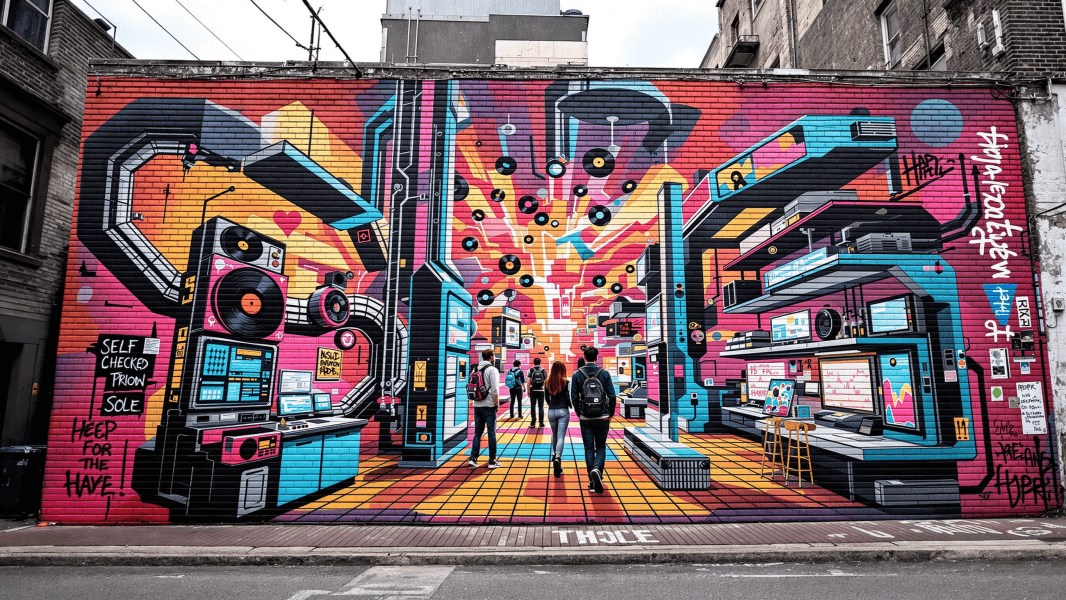
Imagine walking into healthcare the way you now shop at Home Depot, Mr. Bricolage, B&Q, Hornbach, or Bunnings. Imagine they would offer an Amazon Go service: you check yourself in, navigate directly to what you need, use the equipment required, and check out seamlessly, no queues, no unnecessary intermediaries, just efficient problem-solving.
This vision isn't fantasy. AI-powered virtual consultations can instantly assess symptoms, recommend appropriate diagnostic tests, and book them at convenient locations that fit your schedule. Need an ECG? Your virtual doctor schedules it at a facility on your route to the gym. Require blood work? It's arranged for tomorrow morning near your office, with results delivered digitally within hours.
The transformation extends beyond convenience. Medical-grade equipment, redesigned for patient operation, could enable supervised self-diagnosis from home. Pre-configured wearables arrive tailored to your specific health monitoring needs. Treatment protocols become personalised and proactive rather than reactive and standardised.
Think of this service as frictionless, intelligent, and centred entirely around your needs rather than institutional convenience.
The democratisation of concierge medicine
This shift represents something profound: the democratisation of concierge medicine. What was once available only to the wealthy, immediate access, personalised attention, comprehensive care coordination, becomes universally accessible through AI scaling.
Your virtual health concierge never sleeps, never forgets your medical history, and maintains perfect recall of every interaction. It continuously monitors health trends, suggests preventive measures, and coordinates seamlessly with specialists when needed. Most importantly, it treats your time as valuable, optimising every healthcare interaction for maximum efficiency and minimum disruption.
Navigating the transition challenges
This transformation raises important questions about professional roles and service discovery. How will healthcare providers ensure they're findable by AI systems making referral decisions? The answer lies in developing what we might call "AI SEO": optimising services and expertise for algorithmic discovery rather than traditional marketing.
Healthcare workers, meanwhile, must evolve from information gatekeepers to specialists focusing on complex cases requiring human judgment and advanced interventions. This isn't about replacement but about elevation, allowing professionals to practice at the top of their expertise whilst AI handles routine diagnostics and care coordination.
Your first steps forward
Healthcare providers: Begin your AI discovery strategy immediately. Audit what makes your services findable to large language models. Create structured data about your specialties, success rates, and availability. Identify which services could operate with minimal supervision and develop clear protocols for AI-assisted referrals.
Medical device companies: Reimagine your equipment for direct patient deployment. Focus on diagnostic tools that patients could safely operate with proper guidance. Design foolproof interfaces and develop equipment-as-a-service models that make sophisticated healthcare tools accessible without major capital investment.
Embracing the inevitable
The question isn't whether healthcare will undergo this transformation, it's whether you'll lead it or be left behind. Just as Google disrupted traditional search by making information instantly accessible, AI is disrupting healthcare by making quality care immediately available.
The future belongs to those who recognise that patients, when properly empowered, are capable of being active participants in their healthcare rather than passive recipients. DIY hospitals aren't about abandoning professional medical care, they're about creating a system where expertise serves efficiency, technology enables access, and healthcare finally becomes as convenient as every other essential service in our lives.
The tools exist. The technology is ready. The only question remaining is: will you help build the future of healthcare, or wait for it to build itself around you?
💥 May this inspire you to advance healthcare beyond its current state of excellence.