Game over for solo performances
Game over. OpenAI's recent HealthBench release delivered a stark reality check: both September 2024 models alone and model-assisted physicians outperformed physicians with no reference materials (scroll down to "Comparison against physician baselines"). Even more telling, the AI model slightly outperformed doctors who had access to the same model. Meanwhile, the MAI Diagnostic Orchestrator achieves 80% accuracy with OpenAI's o3 model, significantly outperforming generalist physicians whilst demonstrating substantial cost savings.
But here's the twist: this isn't a replacement story. It's an evolution story. These AI advances democratise access to medical expertise, provide crucial second opinions, and boost physician confidence. The future won't eliminate doctors; it'll transform them into medical experience architects. Procedure-centric roles like surgery, complex diagnostic services escalated from AI, human-centred care delivery, and AI oversight will remain distinctly human domains.
The question isn't whether doctors will survive, it's how they'll thrive.
The platform economy arrives in healthcare
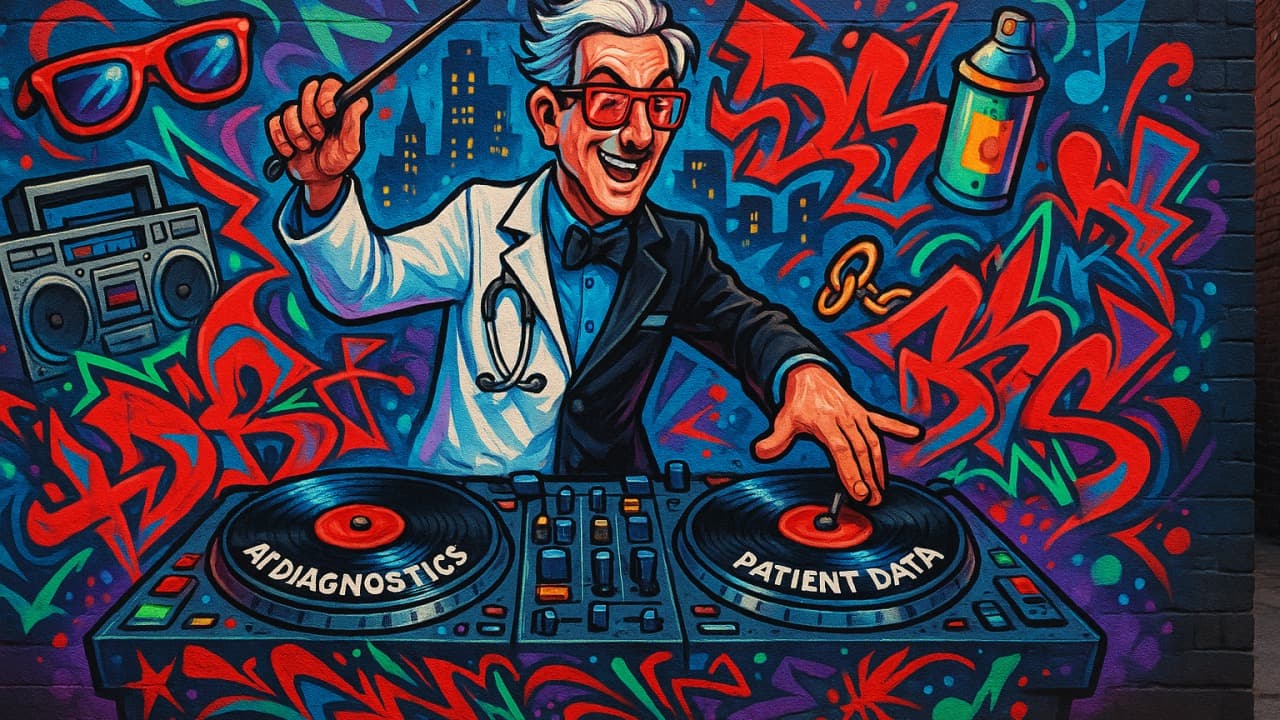
Think of tomorrow's successful doctors less as individual practitioners and more like DJs curating the perfect medical experience. They'll orchestrate AI tools, human specialists, and patient needs into a seamless care delivery experience.
Virtual doctors: the new medical influencers
Cross-disciplinary teams led by physicians but dominated by software engineers and data scientists represent the first major opportunity. Consider Caryn Marjorie, an influencer who created CarynAI and earned over €70,000 in its first week from fans seeking virtual companionship. Her AI provided personalised conversations, remembered every detail, and offered 24/7 availability.
Now imagine that same model applied to healthcare. Virtual doctors with photorealistic avatars, synthetic voices, and conversational abilities that surpass human emotional intelligence. These AI partners become algorithmically optimised for your specific psychology: perfectly compatible, endlessly patient, and unconditionally supportive.
Also consider business models mirroring successful VTubers like Gawr Gura, who boasts 4.74 million YouTube subscribers. Virtual creators generated 50 billion views annually over the past three years. Medical influencers will create health content with AI co-pilots, or develop "diagnostic as entertainment" shows where AI and humans compete to solve medical mysteries House MD-style. Revenue streams include advertising, merchandising, referrals, and licensing agreements with telehealth companies.
Subscription services: concierge care meets AI
The second opportunity lies in hybrid subscription models combining human expertise with AI capabilities. These services will span high-fee concierge care, lifestyle optimisation, and performance medicine, all featuring membership programmes with increasingly blurred boundaries.
Current point solutions lack comprehensive integration and mature AI components, but future platforms will integrate genomics, wearables, and social determinants data. They'll offer tailored lifestyle programmes, longevity medicine, and personalised care plans considering lifestyle, goals, values, and cultural preferences.
Expect boutique subscription services for specific audiences: for example menopause care for Asian women, health optimisation for amateur cyclists, or customisable corporate wellness programmes delivered through franchise networks. Don't worry about accessibility; volume-based "Uber share" models will create opportunities for entrepreneurial doctors and make these services available at reasonable prices for customers.
Experimentation and trials: customers become products
The third opportunity involves virtual services paying customers for medical and health data. Doctors monetise by selling insights and data analytics. This extends to people willing to experiment: taking supplement X for Y days, testing new devices, or participating in behavioural studies. Social media channels will amplify this trend, creating new revenue streams for doctors who can design engaging, scientifically valid experiments that audiences want to follow and participate in.
The business model revolution
Traditional fee-for-service models are giving way to platform-based revenue streams. Doctors will earn through data monetisation, subscription fees, advertising revenue, licensing deals, and performance-based partnerships. The shift resembles how content creators diversified beyond traditional media: multiple revenue streams, direct audience relationships, and technology-enabled scalability.
Your next move
The last human doctor won't be replaced by AI, they'll be managing it!
Start now: identify your unique value proposition, experiment with AI tools, build your platform presence, and develop hybrid service models.
The future belongs to doctors who embrace the conductor's baton, not those clinging to solo performances.
💥 May this inspire you to advance healthcare beyond its current state of excellence.