How will doctors reinvent themselves?
When the avatar of Dr Khan materialises on a mother’s kitchen tablet at 02:15, the paediatrician’s voice is as calm as ever. Her holographic double listens, reassures, adjusts the lighting to examine the toddler’s rash and, within three minutes, files structured notes straight into the hospital EHR. The real Dr Khan is asleep two time‑zones away. The mother will never know.
That scene is not science fiction; it is the logical next waypoint on a journey that has already moved from automatic dictation to trusted clinical copilots. In less than a decade, scribbled shorthand gave way to Nuance’s DAX Copilot, which now drafts encounter notes for thousands of clinicians each day. Large‑language models tuned for medicine, such as Med‑PaLM 2 and Hippocratic AI, score at or near board‑exam thresholds. Documentation (time) paved the way for algorithmic second opinions (trust); a fully fledged twin is the next stop on the line.
The promise feels irresistible. A digital colleague never tires, slips seamlessly into the out‑of‑hours triage queue, remembers every guideline update instantly and costs a fraction of an on‑call rota. Yet medicine is as much about pulse and presence as protocol. Patients lean on a doctor’s empathy as much as on their evidence base. What happens when the clone masters bedside warmth faster (and cheaper!) than any junior registrar? Will the physical clinician become the hand‑crafted, premium edition, wheeled in only for edge cases and emotional high stakes?
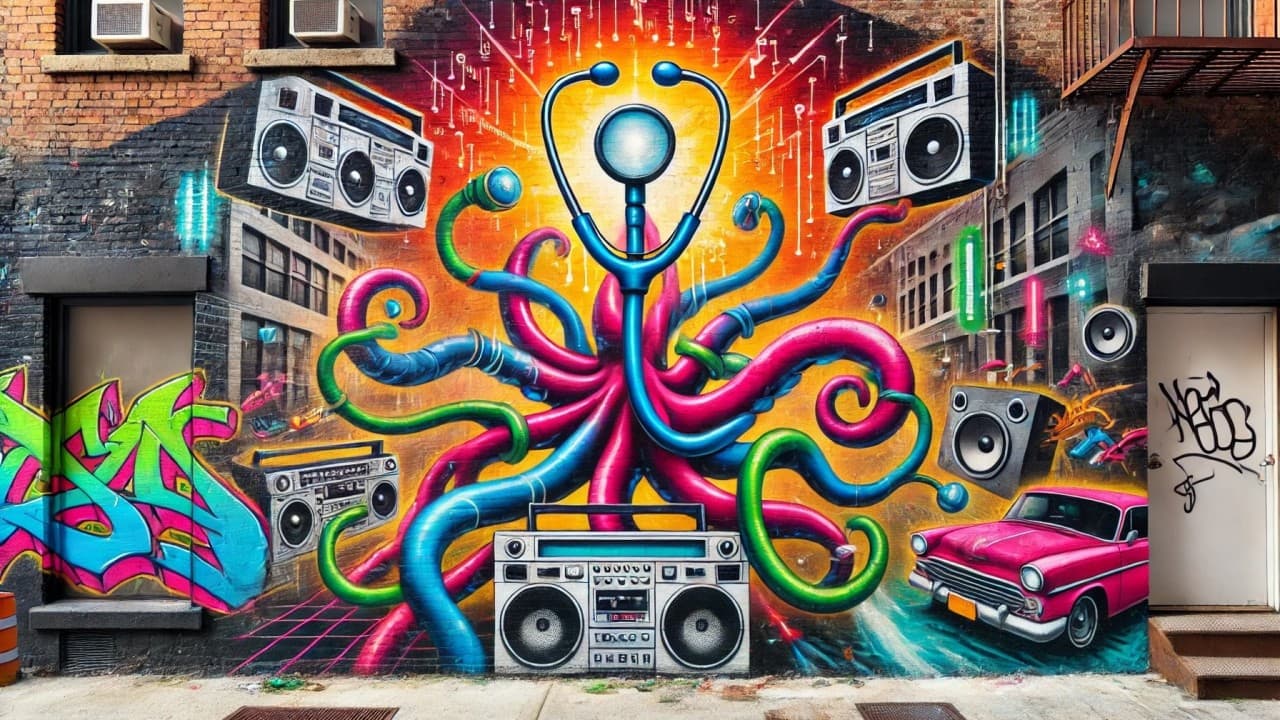
Look at the economics through a platform lens. A decade ago Stripe turned payments into a few lines of code; the “stethoscope as API” movement aims to do the same for clinical judgement. Imagine spinning out your cardiology heuristics as micro‑services: an arrhythmia‑risk endpoint here, a post‑op surveillance module there. Start‑ups and hospital IT teams would stitch specialist skills together like Lego bricks, releasing new care pathways in weeks or days rather than years.
And the learning loop is ferocious. Think of a Spotify Wrapped for Medicine: every consultation feeds back into the model, revealing referral patterns, language quirks, even moments where voice tone boosts patient adherence. In time the twin anticipates a doctor’s style better than her own trainees, just as streaming algorithms now predict what songs we will love before we do. Distribution, pricing and professional identity all shift under that weight, echoing Napster’s jolt and Spotify’s reinvention of listening.
None of this unfolds in a vacuum. Regulators already label autonomous clinical software as “high‑risk”, demanding audit trails and predefined change plans under the EU AI Act and FDA guidance. Hospitals will insist on cryptographic provenance, malpractice insurers on transparent decision logs, and patients on the right to escalate to a human within seconds. The safeguards are complex but tractable and barely slow the underlying cost‑convenience‑quality tide.
Because once a virtual doctor can see you in half a minute, remembers your medical “playlist” from cradle to retirement, and costs less than a cappuccino, queues for carbon‑based care will feel nostalgic. The pressure will not come from venture decks; it will come from everyday people choosing immediacy and precision over waiting rooms and weekday appointments.
So the decisive question is no longer whether physicians will be augmented or replicated, it is how they will reinvent themselves. Will they double down on nuanced empathy, design richer in‑person experiences, or curate portfolios of API‑enhanced expertise? The clinicians who answer that challenge first will shape the next covenant of trust in healthcare.
💥 May this inspire you to advance healthcare beyond its current state of excellence.