LLMs are useless. They can only generate answers.
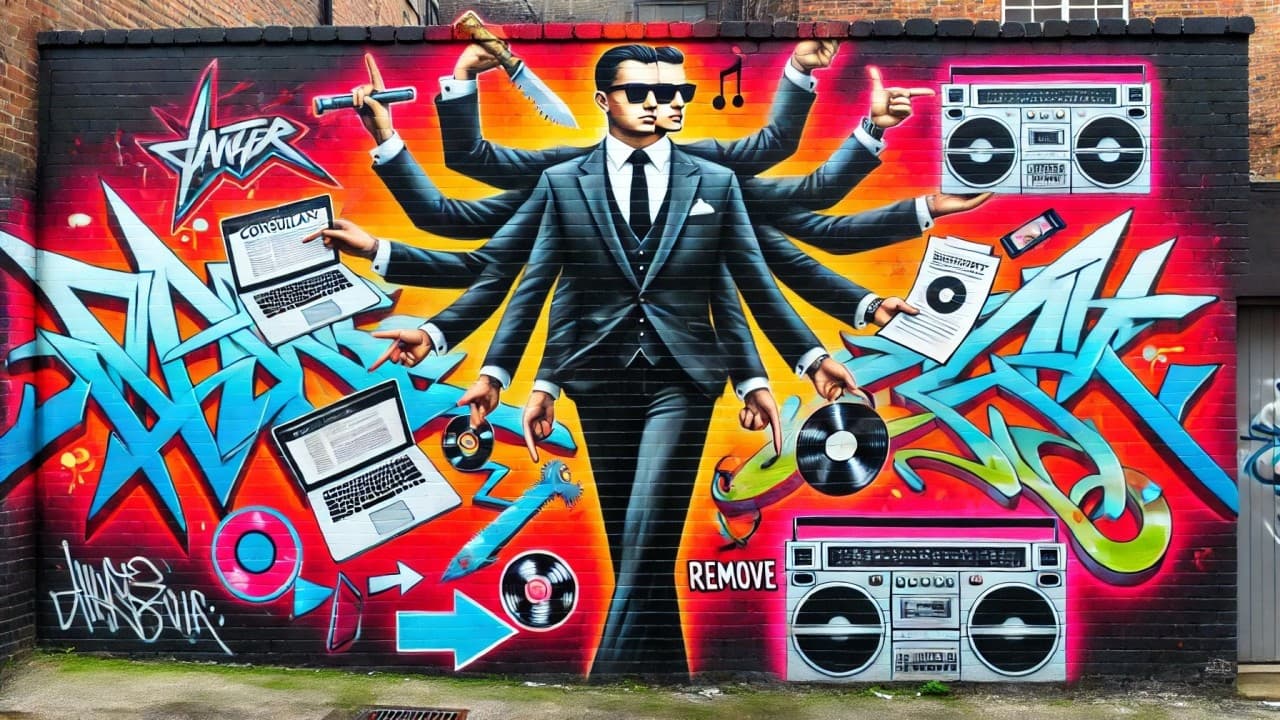
With the rise of generative AI, concerns about consultants becoming obsolete are growing. But instead of fearing this tech, it's time to see it for what it is: a tool. When used well, AI can help consultants create more value for clients than ever before.
Tech fears are nothing new Every major technological breakthrough has sparked worries about job losses. The advent of spreadsheets and databases had people fearing entire professions would vanish. But these innovations didn't replace workers; they changed how work was done, allowing people to focus on what really matters.
AI is here to enhance, not replace AI is just another tool to amplify human skills. A consultant using AI is like a carpenter with a hammer — tools only enhance their craft. AI won't do the thinking for you; it will help process data faster, but it's still the consultant who turns insights into action.
What we can learn from artists and photographers Take artists and photographers, for example. When they embrace AI, their skills and creativity take on a new level. A painter using AI doesn't stop painting; they integrate it to push their craft further. AI enhances their ability to create, not replace it. The same is true for photography — AI can help capture and refine images, but it takes a professional's expertise to get the best results.
This principle applies to consulting too: skilled consultants can use AI to work smarter, while those without experience may struggle to see its true potential.
The consultant's edge: experience and insight Generative AI is powerful, but it has limits. Consultants bring something AI can't — judgement and adaptability in uncertain situations. In sectors like innovation, where there's no one-size-fits-all solution, human insight is essential. AI can repeat patterns based on past data, but it can't predict the unknown. It's not creative; it's more like a highly advanced mimic.
The real risk: misunderstanding AI The danger isn't that AI will replace consultants. The real risk is misunderstanding it. Here's how:
- Overregulation that stifles progress: Focusing only on the risks can block innovation. Regulation should balance safety with opportunity.
- Focusing only on AI's flaws: Yes, AI makes mistakes, but so do humans. Don't let AI's occasional errors overshadow its potential.
- Drowning in generic content: The rise of poorly generated content can flood the market, making it harder to find value.
- Ignoring AI's potential: Businesses that resist AI will fall behind competitors who embrace it. If you had a doctor who refused to use AI for diagnostics, you'd probably look for a second opinion.
- Misjudging AI's impact: You won't know what AI can do for you unless you try it. Predictions that AI would replace radiologists never came true, and demand remains high.
- Neglecting human execution: AI can offer insights, but it's people who turn those ideas into real-world results.
Why organisations must embrace AI To stay competitive, organisations need to invest in AI training. Creating a space for employees to experiment with these tools leads to new ideas and greater efficiency. Ignoring AI now is like entering a building competition without any tools, while everyone else is using power saws and drills.
The irreplaceable human touch No matter how advanced AI gets, it won't replace human creativity, passion, or judgement. Consultants think critically, connect ideas, and solve complex problems. These are uniquely human traits that AI cannot mimic. It's good at offering suggestions based on data, but the spark of innovation, the big-picture thinking — that's all human.
Conclusion Generative AI is a powerful tool, but only in the hands of those who know how to use it. Experts who embrace AI, while sharpening their own skills, will lead the future. The real magic happens when human expertise and AI come together — driving innovation and keeping businesses ahead in an increasingly complex world.