When biology becomes the machine: the next evolution in competitive sports
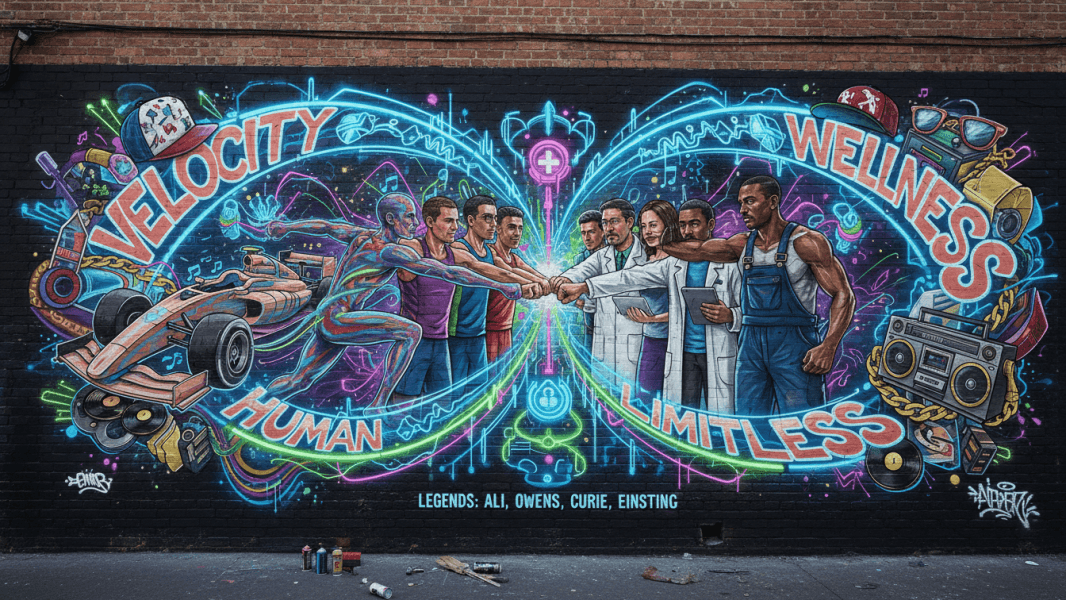
Formula One generates €3 billion annually by making engineering visible. Human biology is infinitely more complex, yet we still watch sports like it's 1950. The first organisation to crack team-based biotech competition will create the next unicorn category.
The signal is already emerging. In Próspera, Honduras, Rejuve AI is launching the Infinite Games 2026, a groundbreaking event where over 100 'longevity athletes' compete whilst comprehensive biomarker and sensor data track biological ageing and therapy efficacy. This isn't just another endurance competition. It's the prototype for a new genre where human performance, biotechnology, and real-time analytics converge.
We're witnessing the next evolution beyond sports-as-entertainment into sports-as-laboratory. This is where Silicon Valley's obsession with optimisation meets the trillion-euro wellness economy. Formula One proved that elite performance requires engineering teams, not just drivers. Now, human biology becomes the machine to optimise.
Think about what happens when a team's 'pit crew' includes both a coach and a molecular biologist. In Formula One, races are won in the pit, not on the track. In biotech sport, the pit crew includes nutritionists, sleep coaches, and molecular biologists optimising recovery protocols between competitive rounds. The strategic decisions shift from gut instinct to data-driven insights: when to push harder based on cortisol levels, when to rest based on inflammatory markers, and which intervention yields the fastest recovery.
This parallels another sports revolution. Oakland A's transformed baseball by finding undervalued metrics that predicted winning. Biotech competitions will drive forward longevity science by discovering which biomarkers actually predict performance under stress. We're not just watching athletes, we're conducting real-world research at scale, with willing participants who understand their contribution to advancing health science.
But here's the fascinating tension: can you make watching real-time biomarker data as compelling as watching a football match? The answer lies in storytelling. Imagine Netflix documentaries following teams through preparation, showing biological transformations rather than just emotional journeys. Picture live broadcasts where viewers see not only the race unfolding but also the internal battle: lactate threshold approaching, inflammation rising, recovery capacity depleting. The drama becomes visceral when you understand what the body is experiencing.
The business model presents an equally intriguing puzzle. Is this B2C entertainment or B2B clinical research ... or both? The answer is a multi-sided marketplace. Athletes pay to participate in elite competitions with unprecedented health insights. Researchers pay for access to comprehensive datasets from humans under peak performance stress. Sponsors pay for exposure in a premium category that attracts health-conscious audiences. Viewers pay for premium analytics feeds that transform passive watching into active learning about human potential.
Consider the pharmaceutical implications alone. Traditional clinical trials struggle with real-world evidence collection. These competitions solve that problem elegantly: you're studying humans under controlled yet extreme conditions, with participants who volunteer enthusiastically and generate data quality that laboratory settings cannot match.
The infrastructure doesn't exist yet, but neither did streaming platforms before Netflix, nor smartphone ecosystems before iOS. Someone will establish the standards. Someone will build the platform. Someone will capture disproportionate value by moving first.
The concrete first step is feasible. Create a single 90-minute streamed event. Film a team-based athletic challenge whilst overlaying real-time biomarker data. Partner with one wearable technology company and one sports federation. Test viewer engagement. Measure whether audiences prefer traditional sports coverage or data-rich alternative feeds. Publish the results openly.
This pilot costs a fraction of traditional sports broadcast rights yet could validate an entirely new category. You're not building a league immediately, you're proving a concept. You're demonstrating that biological data can enhance rather than distract from athletic performance. You're showing sponsors, researchers, and athletes that this model works.
The organisations that move now will define the rules. They'll establish which biomarkers become standard, which data formats enable interoperability, which privacy frameworks balance transparency with protection. They'll create the template that others follow.
Human biology is infinitely more complex than any racing car. It's time our sporting events reflected that complexity, and captured the value it represents.
Your next step: Identify one regional endurance event. Propose the pilot. Stream it. Learn what works. The future of sports isn't just about who crosses the finish line first.
💥 May this inspire you to advance healthcare beyond its current state of excellence.