What if healthcare's greatest failure isn't treatment?
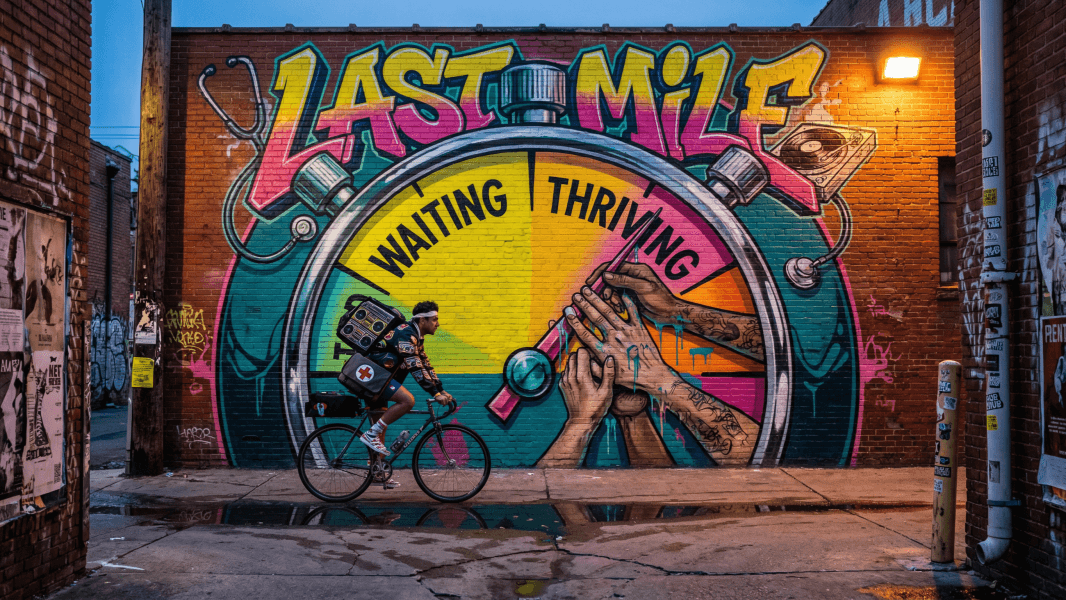
You can have groceries at your door in fifteen minutes. A ride appears the moment you summon it. Same-day delivery has become so routine we barely notice it anymore. Yet the advice that could prevent a heart attack? That still requires a six-week wait, a referral letter, and a small miracle of scheduling.
We have built extraordinary infrastructure for treating disease. Hospitals that perform surgical marvels. Imaging technology that sees what the eye cannot. Pharmaceutical innovation that extends lives by decades. But for maintaining health, for the quiet daily work of prevention, we have built almost nothing. The waiting room remains our symbol of access: rows of plastic chairs, outdated magazines, and time slipping away while people wonder if this appointment was even worth taking half a day off work.
What if the waiting room disappeared, not because care got faster, but because care came to you?
Consider the structural mismatch hiding in plain sight. Thousands of qualified health coaches sit underemployed. Nutritionists with years of training struggle to fill their client rosters. Physical therapists, mental health counsellors, and wellness specialists have skills gathering dust. Meanwhile, millions of people genuinely want to be healthier but cannot navigate the system, cannot afford the entry price, or simply cannot find the door. The supply exists. The demand is overwhelming. Yet somehow, they rarely meet.
This is precisely the problem that gig economy platforms solved in other industries. The creator economy faced identical dynamics: freelance videographers and editors searching for work while brands desperately needed content but had no way to find talent quickly. Enter the marketplace model. Suddenly, a creator could be at your location in thirty minutes, booked for exactly the time you needed.
If a creator can be at your door in half an hour, why can't a health coach?
Imagine booking a registered dietitian for thirty minutes to review your fridge, discuss a meal plan, or interpret that confusing bloodwork report you received last week. Picture requesting an on-demand physical therapist who arrives to assess that nagging shoulder pain before it becomes a chronic injury. Think about fifteen-minute mental health check-ins, not therapy, but triage and guidance from a licensed counsellor who helps you determine what level of support you actually need.
The opportunities multiply when you consider how people already generate health data without anyone to interpret it. Your Apple Watch tracks heart rate variability. Your continuous glucose monitor produces streams of readings. Lab results arrive in patient portals filled with numbers and reference ranges that mean nothing to most people. What if you could upload that data and receive a human synthesis? Not an algorithm's guess, but a qualified professional's interpretation tailored to your life, your goals, your context.
Pause for a moment and consider: how many minutes of qualified, personalised health guidance did you receive last year? Not gym memberships. Not apps. Actual human expertise directed at keeping you well.
The workplace presents another frontier entirely. Companies already book caterers, entertainers, and speakers for events. Why not wellness professionals? Pop-up sessions with nutritionists during lunch hours. Movement specialists offering injury prevention workshops. Mental health counsellors available for brief consultations during high-pressure periods. The infrastructure for booking a DJ exists. The infrastructure for booking a health coach does not ... yet.
Healthcare's last mile problem isn't logistics. It's access to expertise.
Family caregivers represent perhaps the most underserved population of all. They navigate complex health systems on behalf of loved ones, often without any professional guidance, learning through exhaustion and error. On-demand support from someone who understands medication management, symptom monitoring, and system navigation could transform their experience from isolated struggle to supported journey.
Who will build this? Traditional healthcare has shown little appetite for the preventive space. Hospitals focus on acute care. Insurers remain trapped in reactive models. Wellness apps offer convenience but rarely human connection. The vacuum is real, and someone will fill it. The question is whether that someone designs for equity and quality, or simply for speed and margin.
Is the future of healthcare a platform, or a profession? Perhaps the honest answer is both. Personal trainers have operated in a gig economy for decades, and the profession not only survived but thrived. The model works. We simply have not extended it to health coaches, dietitians, and the broader wellness ecosystem.
Uber moved people. Health Agents could move the needle.
Before you build anything, before you draft a business plan or commission a feasibility study, run this experiment: book one on-demand session with a health coach, nutritionist, or wellness professional this week. Use whatever fragmented tools exist today. Document every point of friction: the search, the booking, the payment, the follow-up. That friction is not an inconvenience. That friction is the business model waiting to be built.
The infrastructure for self-care does not exist yet. But the raw materials are everywhere. Qualified professionals seeking meaningful work. People craving guidance they cannot currently access. Technology capable of connecting them instantly. Someone will assemble these pieces. The only remaining question is who, and whether they will do it well.
💥 May this inspire you to advance healthcare beyond its current state of excellence.