Your wrinkle cream just CRISPR'd your future
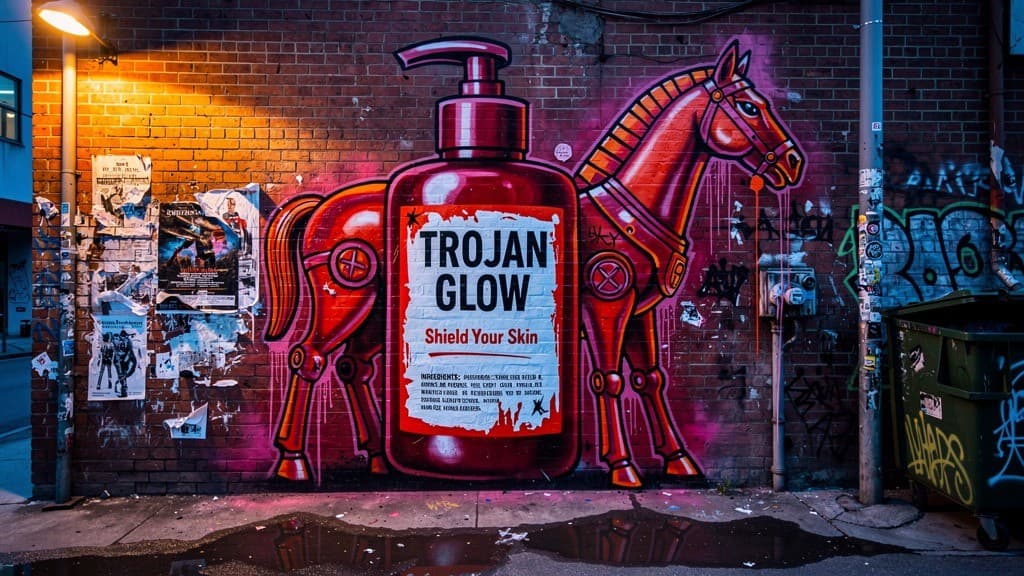
Healthcare has clinics. Beauty has habits. Which one actually changes biology at scale? The answer might surprise you, because whilst your GP sees you twice a year, your bathroom cabinet greets you twice daily. When a skincare brand knows your biological age before your doctor does, the question isn't whether beauty has entered healthcare, it's whether healthcare ever really left the lab.
L'Oréal has mapped roughly 260 skin longevity biomarkers and built what it calls a Longevity AI Cloud to model interventions across life stages. Beiersdorf productised epigenetics for the mass market with NIVEA's Epicelline serum and an "Age Clock" that claims to measure cellular rejuvenation within weeks. Unilever published research showing that people who look younger than their chronological age carry a more stable, resilient skin microbiome, and that topical products can shift that microbial profile toward a "younger" signature. These aren't beauty claims anymore. They're prevention platforms wearing lipstick.
When cosmetics become continuous care
The pivot is architectural, not cosmetic. Estée Lauder frames its Advanced Night Repair franchise around circadian biology, syncing repair pathways to sleep cycles and positioning night-time routines as therapeutic windows rather than vanity rituals. LVMH established a Reverse Aging Scientific Advisory Board and partnered with AI-driven biotech firms hunting senolytics; compounds that clear senescent "zombie" cells accumulating in ageing tissue. If you walked into Sephora tomorrow and bought a serum promising to activate skin longevity pathways using proprietary actives validated by decades of epigenetic research, you wouldn't be shopping. You'd be prescribing.
The shift is from product to platform to preventive service: AI models, biomarkers, and always-on habit loops delivered through supply chains healthcare could never match. Beauty's advantage isn't just convenience. It's trust, frequency, and the fact that millions already believe their moisturiser does something biological. Now it might actually be true. 😁
Four futures at the crossroads
What happens next depends on two choices: whether the data these systems generate remains portable and who benefits from optimisation. Imagine four worlds.
In the first, call it the Preventive Commons, biomarker data becomes an open layer. Brands validate claims in partnership with clinicians, publish datasets, and allow individuals to carry their skin, sleep, and inflammation signals across platforms. Prevention becomes a low-friction public good, and suddenly reimbursement conversations begin. Would your health insurer subsidise a microbiome serum if it demonstrably reduces chronic inflammation markers? The infrastructure exists; only the business model is missing.
In the second scenario, Walled-Garden Prevention, outcomes improve dramatically but only inside a single ecosystem. L'Oréal's AI personalises your routine, Beiersdorf's Age Clock tracks progress, but switching brands means starting over because your biological baseline lives in their cloud. Great for loyalty, troubling for autonomy. Does data portability become a human right when the data is your epigenome?
The third future is Longevity as Social Currency. Tools are accessible, but optimisation becomes compulsory. Your biological age appears on dating profiles; employers prefer candidates with younger epigenetic clocks; "natural ageing" gets reclassified as negligence. Everyone has access, but no one has permission to opt out. Pause here and ask yourself: when prevention becomes visible, does it stay voluntary?
The fourth world is Bio-Privilege Subscriptions, where premium epigenetic routines, at-home diagnostics, and concierge oversight create a stratified society. Elites clear senescent cells with LVMH-partnered compounds whilst mass markets chase unvalidated knockoffs. The gap isn't income anymore, it's cellular. Do we regulate longevity products like performance-enhancing drugs, or do we accept a 120-year glow as the new Birkin bag?
The duty of care no one asked for
These aren't hypothetical dilemmas. If Beiersdorf's Age Clock suggests your skin is ageing faster than expected, have they just delivered a diagnostic insight without medical accountability? When Unilever maps your microbiome instability, who carries the duty of care if that signal correlates with systemic disease risk? The smallest dataset a beauty company needs to become a de facto population-health actor, might already exist in their CRM.
One concrete first step
If your organisation sits anywhere near this crossroads, whether you're in R&D, innovation, regulatory affairs, or strategy, run a two-week Beauty-to-Healthcare Translation Sprint. Pick one measurable biomarker claim your team is exploring or already marketing. Map the evidence standard needed for clinical credibility. Draft a data portability and consent model before you build the next product. Convene one cross-functional room: R&D, legal, data governance, and at least one clinician who understands what validation actually requires. The future isn't distant. It's in the next formulation cycle, and the organisations that translate beauty into prevention, including transparency, portability, and accountability, will own the decade ahead.
💥 May this inspire you to advance healthcare beyond its current state of excellence.